How to Choose the Right Chain Link Fence Mesh?
Choosing the right chain link fence mesh starts with the job it must do. A garden boundary, a school perimeter, and an industrial yard face different demands. Mesh opening, wire gauge, coating, and fence height all affect strength, visibility, and upkeep. Small details matter. A wider opening may suit a low-risk boundary, while tighter mesh can help limit access through the fence. Yet a heavier specification is not automatically better; it can add cost without solving the actual site problem.
Industry figures show why this choice deserves careful attention. Grand View Research estimated the global fencing market at USD 30.4 billion in 2023 and forecast a 5.9% compound annual growth rate from 2024 to 2030. That broad market includes many fence types, not just chain link, so it should not be read as a mesh-specific sales figure. Still, it reflects sustained demand across residential, commercial, and infrastructure projects. For technical checks, ASTM International publishes standards including ASTM A392 for zinc-coated steel chain-link fence fabric and ASTM F668 for polymer-coated fabric. These references can help buyers compare product claims, but they do not replace project-specific assessment. A coastal site, for example, may need different corrosion protection from a dry inland yard. It is easy to overlook that distinction. This guide explains how to compare mesh size, wire thickness, coating, and intended use, while noting where specifications deserve a second look.
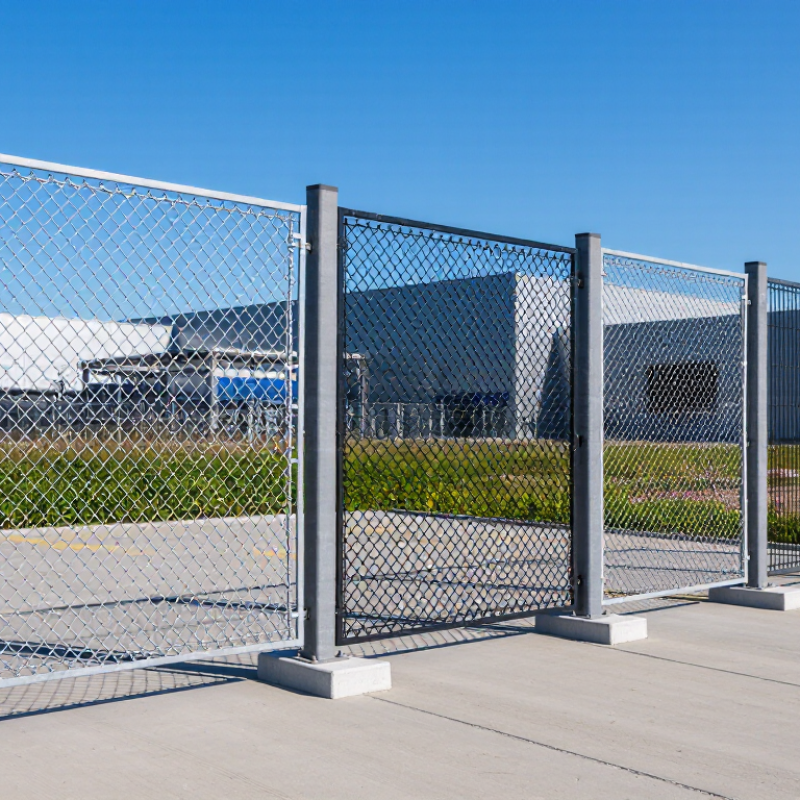
Identify the Main Components of Chain Link Fence Mesh
How to Choose the Right Chain Link Fence Mesh?
Chain link mesh is made from interwoven steel wires bent into a repeating diamond pattern. Two details shape its performance: wire diameter and mesh opening size. Thicker wire generally resists bending better, while smaller openings make it harder to reach through. Compare actual wire measurements, not gauge numbers alone, since gauge systems can differ. A tape measure helps, but check the supplier’s stated dimensions too.
Small details matter. The top and bottom edges have a selvage, usually formed as knuckles or twisted wire ends. Knuckled edges feel smoother; twisted edges have sharper points and may suit some installations better. Consider who may touch the fence, especially near paths or play areas. This choice deserves a second look.
Coating is another key component. Galvanized wire has a zinc layer that helps resist rust, while vinyl-coated mesh adds a polymer layer and changes the finished color. Scratches and cut ends can still need attention over time. Posts, rails, and ties are not part of the mesh itself, but they hold it in place; an excellent fabric can sag if the framework is poorly spaced or tensioned. Check the full assembly before choosing.
Choose the Mesh Opening Size for Your Security Needs
Mesh opening size affects how easily someone can reach through a fence, pass an object, or gain a foothold. Smaller openings generally make these actions harder, but they do not make a fence impossible to breach. Wire thickness, fence height, posts, and installation quality matter too.
A common 2-inch mesh allows clear sightlines and works for many general boundaries. For areas needing closer control, a smaller opening may reduce handholds and limit access for small objects. Measure twice. Check the actual opening dimensions in the product specifications, since measurement conventions can vary. A tighter mesh may also weigh more and catch more leaves or debris.
Match the opening to the real risk, not just the word “security.” A school or public walkway may need visibility, while a service enclosure may benefit from smaller openings. For pets, consider whether paws or noses could pass through; mesh size alone may not prevent climbing or digging. There is no perfect opening size for every site. Compare a physical sample against the objects or access points you want to restrict, and review the full fence design before choosing.
How to Choose the Right Chain Link Fence Mesh? - Choose the Mesh Opening Size for Your Security Needs | Nominal Mesh Opening | Approximate Opening | Typical Visibility and Climbability | Common Uses | Security Considerations |
| 2 in | 51 mm | Open sightlines; larger openings can offer more potential footholds. | Residential boundaries, gardens, and general-purpose enclosures. | A common general-purpose option. Consider a smaller opening where restricting access or footholds is a priority. |
| 1¾ in | 44 mm | Good visibility, with smaller openings than standard 2 in mesh. | Residential and light commercial perimeter fencing. | Can provide a practical balance of visibility and access control; the overall fence design remains important. |
| 1½ in | 38 mm | More restricted openings while retaining useful visibility. | Commercial sites, equipment areas, and facilities needing tighter perimeter control. | Smaller openings may make footholds less convenient, but do not make a fence climb-proof. |
| 1 in | 25 mm | Denser mesh; visibility and airflow are reduced compared with larger openings. | Utility areas, secure enclosures, and locations where smaller openings are preferred. | Useful when limiting access through the mesh is a concern. Check that the selected mesh and wire meet applicable project requirements. |
| ⅜ in mini-mesh | About 10 mm | Very small openings; reduced visibility and airflow. | Special-purpose enclosures and sites requiring close mesh spacing. | Small openings can help deter passage through the mesh, but installation details, fence height, gates, and wire strength still affect security. |
| Opening sizes are nominal and may vary by product specification. Mesh size alone does not determine security: also consider wire gauge, fence height, posts, tensioning, gates, installation quality, and local requirements. |
Select Wire Gauge and Coating for Strength and Durability
How to Choose the Right Chain Link Fence Mesh?
Select Wire Gauge and Coating for Strength and Durability
Wire gauge and coating work together: thicker wire resists bending, while a sound coating slows corrosion. Gauge numbers can be confusing. A 9-gauge wire is thicker than an 11-gauge wire, so it is often chosen for demanding sites, such as school boundaries or areas exposed to wind. For a lighter garden enclosure, thinner wire may be adequate. Check the fabric’s stated wire diameter, not gauge alone; manufacturing tolerances and mesh size also affect real-world rigidity. ASTM A392/A392M-11(2022) sets specifications for zinc-coated steel chain-link fabric, including coating and wire requirements. A useful reference, not a substitute for checking the product specification.
For steel fencing, zinc galvanizing provides a protective layer; vinyl coatings add a barrier and color, but damage can expose the steel beneath. Look closely at cut ends, ties, and lower sections where water and soil collect. The NACE IMPACT study estimated global corrosion costs at US$2.5 trillion annually, or 3.4% of global GDP, and reported that corrosion-management practices could save 15–35% of those costs. That figure covers many industries, not fences specifically. Still, it explains why coating choice matters. Coastal air or de-icing salt may justify stronger corrosion protection, though no coating is maintenance-free. I’d compare coating class, wire diameter, and site exposure side by side. It is easy to overbuy one feature and overlook the weak spot.
Match Mesh Height and Roll Dimensions to the Fence Layout
Match the mesh height to the fence’s actual job and the ground beneath it. Measure from finished grade to the planned top edge, not from an uneven patch of soil.
A sloped yard may need stepped sections or mesh adjusted along the slope; either choice affects the visible clearance. Check gate heights and top-rail placement too. Small mismatches stand out once the fence is tensioned.
Measure each straight run between terminal posts, then account for corners, gates, and any planned overlaps before choosing roll lengths. A roll that is too short can leave an awkward joint near a gate or corner. Too much excess means more cutting and potentially more waste.
Measure twice. On uneven ground, measure several points along the run, since the lowest spot can change the height you need. Leave a little room for fitting and tensioning, but do not treat extra mesh as a substitute for a layout plan.
I’ve seen neat measurements on paper miss a post offset by only a few inches; it is worth checking the site again before ordering.
Check Quality Standards and Long-Term Maintenance Requirements
Before choosing chain link fence mesh, check the written specification, not just the sample on display. Confirm wire diameter, mesh opening, selvage style, and coating type. Ask whether measurements follow a recognized testing standard, and request inspection records or a certificate where available. Requirements vary by location and project, so compare documents against the applicable specification. A shiny finish can look reassuring, but it does not prove consistent coating thickness. Small defects matter. Look for bare spots, uneven galvanizing, sharp burrs, and loose weaving along the roll edge. One detail is easy to miss: a sample cut from the middle may not show damage near the ends.
Long-term maintenance depends on the site as much as the mesh. Near roads or coastal air, salt and grime can collect on the wire; rinse deposits with clean water and inspect more often. Check posts, ties, and tension points for movement, rust, or broken connections, especially after storms. Keep soil and wet leaves from sitting against the lower edge. Repair damaged coating with a compatible product recommended for the coating system, and replace wire that has lost strength. A basic inspection twice a year is a useful starting point, though harsh conditions may call for more frequent checks. Maintenance plans are often written and then forgotten; a dated note and a few clear photos can make small changes easier to track.