Why Choose PSA Activated Carbon for Gas Separation?
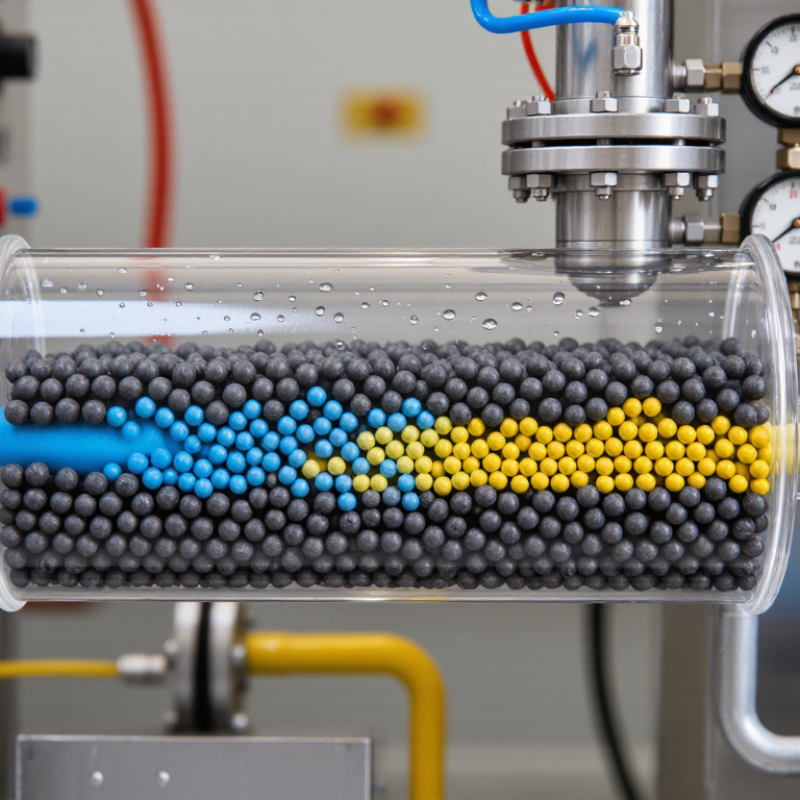
Pressure swing adsorption separates gas mixtures by changing pressure, allowing an adsorbent to capture selected molecules and release them during regeneration. Psa Activated Carbon can support this process when its pore structure and surface properties match the target gases. In a packed vessel, gas flows through a bed of dark granular material; pressure, flow rate, and cycle timing influence what the bed retains. Small pores matter. So does moisture control.
The practical question is not whether activated carbon works in every PSA unit. It does not. Suitability depends on the gas pair, operating conditions, and required product purity. Different grades can show different adsorption capacity, selectivity, and regeneration behavior, so supplier data should be checked against application-specific testing. For example, a carbon chosen for one gas mixture may perform poorly with another, even when the equipment appears similar. That detail is easy to overlook. It deserves attention.
A sound selection process considers particle size, pressure drop, mechanical strength, contaminants, and expected service life. Engineers should also review breakthrough data and confirm that test conditions resemble the intended plant. These checks help prevent a promising laboratory result from becoming an expensive field surprise. No single material choice guarantees stable output; maintenance and process control remain important. Psa Activated Carbon may be a practical option, but evidence from the actual feed gas should guide the decision. The trade-offs are real, and some require further testing.
How PSA Gas Separation Works
Pressure swing adsorption (PSA) separates gases by changing pressure, not by heating the feed. A compressed gas mixture enters a vessel packed with adsorbents. At high pressure, materials such as activated carbon hold selected impurities on their surfaces, while the target gas passes through. In hydrogen purification, carbon can help capture carbon dioxide and some hydrocarbons; the exact role depends on the feed and adsorbent blend. The bed has limited capacity.
When the bed approaches saturation, valves redirect the feed to another vessel. The first vessel is depressurized, releasing trapped gases; a purge and repressurization prepare it for another cycle. Several beds take turns, keeping product flow steady. Small details matter: moisture, pressure, flow rate, and valve timing can all affect purity and recovery. Not magic.
The scale is significant. The International Energy Agency’s Global Hydrogen Review 2024 reports that hydrogen demand reached about 97 million tonnes in 2023, while low-emissions production remained below 1%. That is context, not a PSA performance claim. PSA design must be matched to the actual gas composition and product specification. A carbon bed that works well for one feed may perform poorly on another; testing is still essential.
The Role of Activated Carbon in PSA Systems
In a pressure swing adsorption (PSA) system, activated carbon helps separate gas by selectively holding certain molecules on its porous surface. As pressure rises, carbon dioxide and some impurities are adsorbed; when pressure drops, they are released. The U.S. EPA’s AgSTAR Project Development Handbook reports that raw biogas commonly contains about 50–70% methane and 30–50% carbon dioxide. That gap is what the separation stage must address. Small pores help.
Activated carbon’s pore structure and surface chemistry influence how much gas it captures and how quickly the bed can be regenerated. In practice, performance depends on the whole cycle: pressure, flow rate, bed design, and feed cleanliness. Moisture and trace contaminants can occupy adsorption sites, so drying and pretreatment matter. IEA Bioenergy Task 37’s report on biogas upgrading technologies describes PSA as one established route, while emphasizing that technology selection depends on feed conditions and operating needs.
The numbers on a process sheet can look reassuring. Real gas is less tidy. Variable moisture, uneven flow, or aging carbon may reduce separation efficiency and increase regeneration demands. Activated carbon is not a universal fix; careful testing with the actual gas mixture is essential.
Adsorption and Regeneration in the Separation Cycle
In pressure swing adsorption, a gas mixture passes through a vessel packed with activated carbon. Gas molecules interact with the carbon’s internal pore surfaces, but not all components are retained equally. The balance depends on pore structure, pressure, temperature, and the mixture itself. Small differences matter. A damp feed, for example, can change adsorption performance and complicate comparisons between operating runs.
During the high-pressure step, the carbon holds more of a selected component while the less strongly adsorbed gas leaves the bed. The vessel then depressurizes, reducing the conditions that favored adsorption. Captured molecules desorb and exit in a smaller, more concentrated stream. Some systems use a purge or vacuum step to support regeneration. The exact sequence varies with the gas and product requirements. Real cycles are less tidy than diagrams suggest.
Several beds usually take turns, so one can produce gas while another regenerates. Valve timing, pressure equalization, and bed condition affect both recovery and product purity. Operators monitor pressure trends and outlet composition; a gradual change can signal a leak, fouling, or carbon aging. Maintenance is not glamorous, but it matters. Regeneration also has limits: a bed may not return to its original capacity every cycle. That trade-off deserves attention when evaluating long-term performance.
Gases Commonly Separated with PSA Activated Carbon
Why Choose PSA Activated Carbon for Gas Separation?
Gases Commonly Separated with PSA Activated Carbon
Pressure swing adsorption (PSA) activated carbon is used in gas streams where one component binds more strongly to the adsorbent than another. In hydrogen purification, carbon beds can capture carbon dioxide, methane, and other impurities while hydrogen passes through. The International Energy Agency reported global hydrogen demand of 97 million tonnes in 2023 in its Global Hydrogen Review 2024. Even small impurity levels can matter in downstream processes, so bed design and feed-gas testing are essential. Clean, dry feed helps; wet gas can reduce adsorption performance.
Biogas upgrading is another application. Activated carbon can selectively adsorb carbon dioxide, helping enrich the methane fraction, though real systems may need pretreatment and additional separation steps. The IEA’s Outlook for Biogas and Biomethane estimated global biogas production at about 1.3 exajoules in 2018, a substantial stream with varied compositions. The real world is less tidy: feed gas changes with its source, and a carbon grade suited to one mixture may perform poorly on another. PSA systems for nitrogen production often use carbon molecular sieves rather than ordinary activated carbon, so the adsorbent should match the target gases, operating pressure, and required purity.
Why Choose PSA Activated Carbon for Gas Separation? — Gases Commonly Separated with PSA Activated Carbon | Gas Separation | Typical Feed | Gas Commonly Recovered | Gases Preferentially Adsorbed | Typical Application | Important Consideration |
| Hydrogen purification | Hydrogen-rich reformer, refinery, or synthesis-gas streams | Hydrogen | Depending on the adsorbent bed, carbon dioxide, carbon monoxide, methane, and other impurities | Recovery of high-purity hydrogen for industrial use | Commercial hydrogen PSA systems commonly use activated carbon together with other adsorbents. Feed composition and the full adsorbent arrangement determine performance. |
| Biogas upgrading | Raw biogas containing mainly methane and carbon dioxide, with variable moisture and trace contaminants | Methane-rich product gas | Primarily carbon dioxide under suitable process conditions | Reducing carbon dioxide content to produce upgraded biogas | Water and contaminants such as hydrogen sulfide may require pretreatment. Activated carbon is one possible adsorbent; the process design and feed conditions affect suitability. |
| Nitrogen generation from air | Compressed air | Nitrogen-rich product gas | Oxygen is taken up more rapidly than nitrogen by a suitably engineered carbon molecular sieve | On-site nitrogen supply for industrial processes | This application uses carbon molecular sieve with tailored pore structure, not ordinary activated carbon. Dry, oil-free feed air is generally important. |
| Carbon dioxide removal from nitrogen-rich streams | Selected dry process-gas streams containing carbon dioxide and nitrogen | Nitrogen-rich gas | Carbon dioxide, depending on pressure, temperature, and adsorbent properties | Gas conditioning or recovery of a nitrogen-rich stream | Separation feasibility and product purity depend on the CO₂ concentration, operating cycle, and competing components; PSA is not equally suitable for every feed. |
Note: PSA performance depends on feed composition, pressure, temperature, moisture control, cycle design, and adsorbent selection. Activated carbon is often used as one part of a multi-adsorbent system rather than as the sole adsorbent.
Factors That Affect Separation Performance
In PSA gas separation, activated carbon performance depends on more than its nominal surface area. Pore-size distribution affects which gas molecules enter readily and which are adsorbed more weakly. A broad pore structure may offer capacity, yet reduce selectivity for a particular gas pair. Small details matter. Adsorption behavior also changes with pressure, temperature, and feed composition.
Higher feed pressure can increase gas uptake, but useful working capacity depends on how fully the bed regenerates during depressurization. Water vapor and oil vapors can occupy pores or slow mass transfer, so inlet conditioning deserves close attention. Even modest temperature swings may shift adsorption equilibrium and affect product purity. Not every deviation is obvious. Flow rate matters too: fast cycling can leave parts of a pellet underused, while slow cycles reduce throughput.
Particle size, bed depth, and packing uniformity affect pressure drop and gas contact time. Dust or uneven packing can create channels, allowing gas to bypass active regions and lowering separation efficiency. Operators should check breakthrough curves and product composition under realistic feed conditions, rather than relying on a single laboratory result. Feed quality can drift from day to day, so regular monitoring is important.