

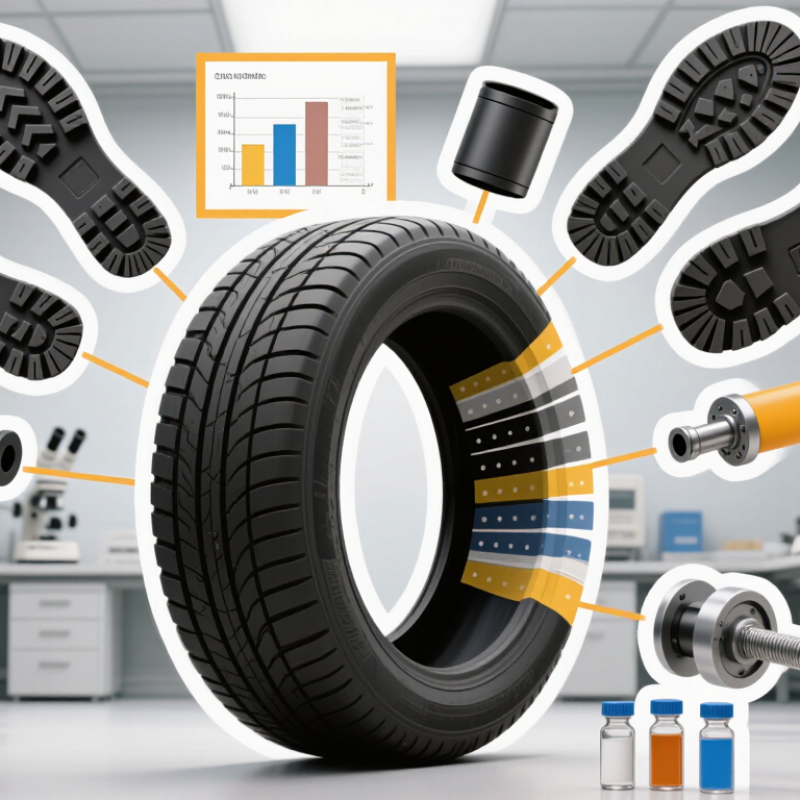
Styrene Butadiene Rubber is used in products ranging from tires and footwear to molded parts and industrial goods. Yet choosing a grade by name alone can lead to poor fit, processing problems, or unexpected costs. The best choice depends on how the material will perform in your specific application. Details matter.
These seven tips focus on practical checks buyers can make before placing an order. Define the required properties, such as hardness, abrasion resistance, resilience, and processing behavior. Compare technical data sheets, but confirm that the listed test methods and conditions match your needs. Ask suppliers about grade consistency, available documentation, packaging, lead times, and minimum order quantities. A small sample can reveal mixing or processing issues that a specification sheet may not show.
Price deserves careful scrutiny. A lower unit cost may not mean lower overall cost if the material causes more rejects, slows production, or arrives inconsistently. Request clear quotations and compare equivalent grades, delivery terms, and quality commitments. Verify that the supplier can answer technical questions with evidence, not broad assurances. Keep records of samples, test results, and agreed specifications. That sounds obvious, but it is easy to overlook when schedules tighten. No checklist removes every risk. Revisit your assumptions, especially when changing suppliers or applications, and consult qualified technical staff before making a large commitment.
ASTM D1418 identifies styrene-butadiene rubber as SBR. The standard provides a shared naming system, not a performance grade. Use “SBR” to confirm the polymer family, then request the exact grade and formulation details. Ask whether the material is emulsion SBR or solution SBR, and check the stated styrene content, Mooney viscosity, and test methods. Small differences can affect mixing, tack, wear, and low-temperature behavior.
A useful market reference is the U.S. Tire Manufacturers Association’s 2023 tire shipment report, which estimated 337.2 million tires shipped in the United States. That is a scale indicator, not an SBR consumption figure. Tire compounds can contain different rubber blends, so shipment totals cannot establish how much SBR a specific application requires. Still, the number reminds buyers why clear material identification matters across high-volume supply chains.
One detail is easy to miss: a tidy datasheet may not identify the test method behind each value. Ask for a certificate of analysis tied to the delivered lot, and compare reported results with your own acceptance limits. Record the D1418 designation on purchasing documents, but do not treat the abbreviation as proof of suitability. A small processing trial can expose issues that a polymer name alone cannot.
Before comparing SBR grades, define what the rubber must do in service. General-purpose SBR often contains about 23.5% bound styrene, but treat this as a reference point, not a guarantee. Bound styrene is chemically incorporated into the polymer and can influence stiffness, tensile behavior, and resilience. More styrene may increase hardness, while the final balance also depends on molecular structure, oil extension, and compounding ingredients. Small differences matter.
For a tire tread, footwear sole, or molded seal, note the operating temperature, expected flexing, abrasion exposure, and target hardness. Ask suppliers for current technical data and test values measured by stated methods. Compare like with like. A hardness number alone cannot settle the purchase. If your process uses high shear or warm mixing, trial a small batch and record scorch behavior, mixing time, and dispersion. Paper specifications can disappoint. Check lot consistency and storage conditions, too, since age and handling may affect processing behavior. Avoid choosing solely by the 23.5% figure; it does not describe every performance need. The suitable grade is the one that meets your measured targets in the actual compound, even if selection takes another round of testing.
Before comparing prices, compare each grade’s test conditions. A Mooney value is meaningful only when the method, temperature, and rotor are stated. Ask for ML(1+4) at 100°C, where applicable, and compare like with like. ASTM D1646 describes Mooney viscosity testing. Small differences matter. A shift can affect mixing torque, mill handling, and compound consistency, even when two grades share the same nominal label.
Check ash and volatile matter on the batch certificate of analysis, not only on a general product sheet. ISO 247-1 covers ash determination, while ISO 248-1 covers volatile matter in raw rubber. Elevated ash may signal more inorganic residue; excess volatiles can complicate weighing and processing. Treat these results as indicators, not automatic proof of poor quality. Sampling and test methods matter.
Styrene content influences stiffness, tack, and low-temperature flexibility, so match it to the compound’s job. Request the reported percentage, analytical method, tolerance, and batch-to-batch range. Then compare recent certificates from multiple lots. There is no universal best number. One awkward detail: supplier averages can hide variation between batches, so a single attractive result is not enough. Keep the full specification beside your trial notes, including units and test conditions.
Compare grade specifications: check Mooney viscosity, ash, volatiles, and styrene content.
Illustrative screening figures for a general-purpose emulsion SBR profile: Mooney viscosity 52 ML (1+4) at 100°C, ash 0.5% maximum, volatiles 0.75% maximum, and bound styrene 23.5%. These are not universal limits; compare the exact grade specification and certificate of analysis before purchasing.
When comparing styrene-butadiene rubber (SBR), treat a glass-transition temperature near −50 °C as a reference, not a guarantee of cold-weather performance. Below this region, the material generally becomes less flexible and more prone to stiffening. That change can affect grip, impact response, and sealing on a cold morning. Small differences matter. The stated Tg may vary with the grade, styrene content, and test method, so check the supplier’s technical data and ask how the value was measured.
Match the rubber to the part’s actual service conditions. A tire tread, shoe sole, and molded seal may need different balances of flexibility, abrasion resistance, and heat performance. Compare candidate grades using the same test conditions, and consider the finished compound rather than unfilled polymer alone. Fillers and other ingredients can shift performance. If low-temperature use is critical, test samples at the expected operating temperature and inspect them after repeated flexing. I would not select a grade from Tg alone; it is a useful screening figure, but real-world results can still surprise you.
Before approving a shipment, match the certificate of analysis to the exact lot number on the bags or shipping documents. Check key values, such as Mooney viscosity, styrene content, and volatile matter, against the agreed specification and test method. A passing average may hide variation, so ask how the supplier handles out-of-range results. Keep the evidence.
Inspect packaging details before dispatch. Look for intact bag seams, sealed liners where specified, clear lot labels, and pallets protected from rain or punctures. A clean pallet can look reassuring, but appearance is weak evidence. Photograph damaged packaging on arrival and record affected lot numbers before the material is moved or used.
Confirm the stated shelf life, manufacture date, and recommended storage conditions for the specific grade. Then calculate landed cost, not just the quoted price: include freight, insurance, duties, unloading, and any storage or delay charges. Delivery terms should name the destination and clarify who arranges transport, handles unloading, and bears risk at each stage. I would still leave room for uncertainty: port delays and local handling costs can change the final figure, so request a written estimate with assumptions stated.
| Cookie | Duration | Description |
|---|---|---|
| cookielawinfo-checkbox-analytics | 11 months | This cookie is set by GDPR Cookie Consent plugin. The cookie is used to store the user consent for the cookies in the category "Analytics". |
| cookielawinfo-checkbox-functional | 11 months | The cookie is set by GDPR cookie consent to record the user consent for the cookies in the category "Functional". |
| cookielawinfo-checkbox-necessary | 11 months | This cookie is set by GDPR Cookie Consent plugin. The cookies is used to store the user consent for the cookies in the category "Necessary". |
| cookielawinfo-checkbox-others | 11 months | This cookie is set by GDPR Cookie Consent plugin. The cookie is used to store the user consent for the cookies in the category "Other. |
| cookielawinfo-checkbox-performance | 11 months | This cookie is set by GDPR Cookie Consent plugin. The cookie is used to store the user consent for the cookies in the category "Performance". |
| viewed_cookie_policy | 11 months | The cookie is set by the GDPR Cookie Consent plugin and is used to store whether or not user has consented to the use of cookies. It does not store any personal data. |
| Key Principles | Criteria |
| Environment |
|
| CSR Policies and Reporting |
|
| Social Investment Programmes |
|
| Key Principles | Criteria |
| Quality of Product |
|
| Quality of Factory |
|
| Quality of Management |
|
| Key Principles | Criteria |
| Monitoring and Control |
|
| Management |
|
| Key Principles | Criteria |
| Global Presence |
|
| Logistical Assets |
|
| Terminal Handling |
|
| Key Principles | Criteria |
|
Tapping and Field Latex |
|
|
Concentrated Latex Processing, Handling & Storage and Shipping |
|
|
Laboratory & Chemical Handling |
|
|
EHS Management System |
|
| Key Principles | Criteria |
|
Monitoring and Mitigating Key Impacts |
|
|
Social Responsibility |
|
|
Social Investment |
|
| Key Principles | Criteria |
|
Security Controls |
|
|
Security Certification |
|
| Key Principles | Criteria |
|
Quality of Raw Material |
|
|
Quality of Process |
|
|
Quality of Management |
|
| Key Principles | Criteria |
| Certified Team |
|
| Technical Expertise |
|
| Key Principles | Criteria |
| International Standards and Certification |
|
| Customised Products |
|
| Testing |
|
| Key Principles | Criteria |
| Security Controls |
|
| Security Certification |
|