

Who Are the Top UPVC Fittings Manufacturers in China?

Who are the top UPVC fittings manufacturers in China? The answer depends on the job, not just a company’s name or catalogue size. Upvc Fittings serve water supply, drainage, irrigation, and industrial systems, where a small mismatch can cause leaks or slow installation. Buyers should compare fitting dimensions, socket finish, pressure ratings, raw-material consistency, and compatibility with the pipe standards they already use. Details matter.

This guide introduces manufacturers worth evaluating and explains how to judge them with evidence. A polished website is only a starting point. Look for clear product data, traceable quality-control steps, production capacity, and responsive technical support. Request samples and inspect molded surfaces, edges, and connection depth. Ask how the supplier checks batch consistency and what inspection documents accompany an order. Certifications can help, but their scope and validity should be checked rather than assumed. Not always easy.

The strongest shortlist will depend on intended use, order volume, delivery needs, and documentation requirements. One supplier may offer broad product coverage, while another may suit custom sizes or smaller trial orders. No shortlist is perfect. Company capabilities and market conditions can change, so confirm current details directly before purchasing. The aim is not to declare a universal winner, but to help buyers compare Chinese UPVC fittings manufacturers carefully and make decisions based on verifiable product information, not marketing language alone.
Who Are the Top UPVC Fittings Manufacturers in China?

What Are UPVC Fittings and Where Are They Used?

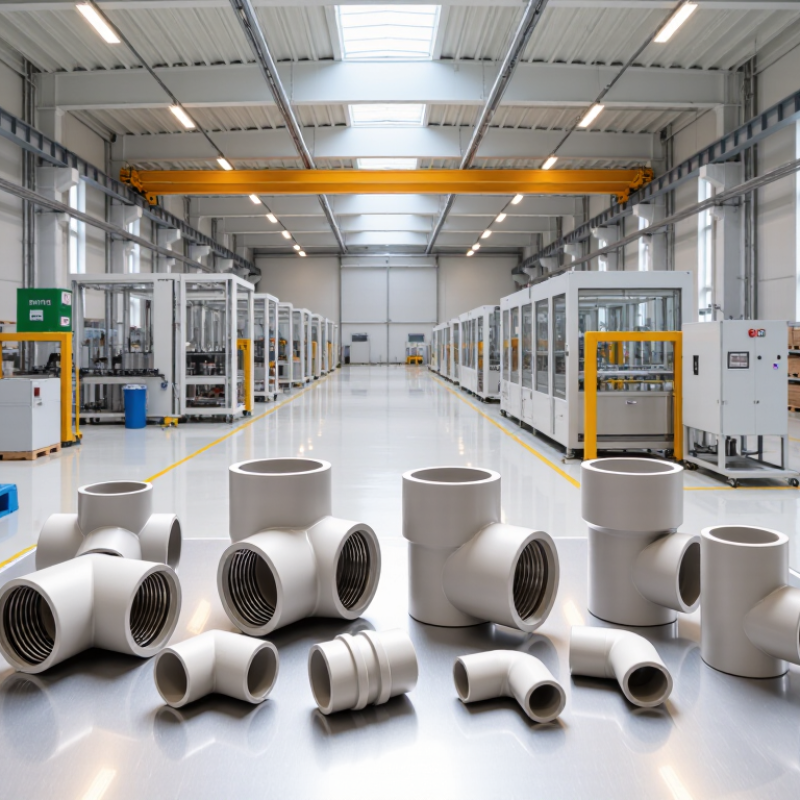
UPVC fittings are the connection pieces in an unplasticized PVC piping system. Elbows turn a line around a wall; tees split flow toward another branch; reducers join pipes of different diameters. Couplings and adapters connect straight sections or link pipes to other equipment. Small parts matter. Their job is to keep the route aligned and the joint sealed.

These fittings appear in building water-supply networks, irrigation lines, drainage systems, and some industrial fluid applications. The right choice depends on the fluid, pressure, temperature, pipe size, and joint method. Solvent-weld, threaded, and rubber-ring connections are not interchangeable, so installers should follow the system specifications. UPVC is generally chosen for cool-water service, not unrestricted hot-water use. A fitting can look sound yet still leak if the pipe is poorly cut, dirty, or misaligned.

Demand for reliable water infrastructure gives this topic real weight. The WHO/UNICEF Joint Monitoring Programme’s 2023 report estimated that 2.2 billion people lacked safely managed drinking water services in 2022. That figure does not measure UPVC use, but it highlights the need for dependable distribution systems. One practical caveat: material quality alone cannot guarantee performance; correct sizing, pressure ratings, and careful installation matter just as much.
How Are UPVC Fittings Manufacturers in China Evaluated?

Evaluate UPVC fittings manufacturers through evidence, not polished catalogs. Check resin and batch traceability, socket dimensions, wall thickness, pressure class, and hydrostatic test records. ISO 1452 covers PVC-U piping systems for water supply and pressure drainage; compare certificates with the exact application and local specifications. Ask for recent test reports, not just a certificate on the wall. PlasticsEurope’s Plastics – the Fast Facts 2024 reports global plastics production of 413.8 million tonnes in 2023. That broad figure is not a quality benchmark, but it shows why consistent material controls matter across a huge supply chain.

Inspect samples for clean molded surfaces, even socket depth, and clear batch markings. Request production records, inspection frequency, and corrective-action examples. A factory visit can reveal whether gauges are calibrated and test equipment is actually used. OECD’s Global Plastics Outlook (2022) estimated that only 9% of plastic waste was recycled in 2019. For environmental claims, ask for documented material sourcing and waste handling; do not treat a vague “eco-friendly” label as proof. Some buyers overvalue low prices. I would not.

Tips: Compare at least three recent batches, and record dimensions yourself with calipers. Confirm lead times and replacement procedures in writing. A tidy file is useful, but it cannot replace repeatable test results.

Which Companies Are Among China’s Leading UPVC Fittings Manufacturers?

China’s leading UPVC fittings manufacturers are usually established producers with dedicated moulding lines, in-house testing, and experience supplying plumbing or irrigation projects. Many operate in major manufacturing regions such as Zhejiang, Guangdong, and Jiangsu. Their product ranges often include elbows, tees, couplings, reducers, and threaded adapters in several diameters.

Look beyond a polished catalogue. Ask whether a manufacturer can provide material specifications, dimensional tolerances, pressure-test records, and samples from the same production line used for bulk orders. A well-made fitting should have clean socket edges, even wall thickness, and threads that engage without force. Small details matter. They can affect installation speed and joint reliability.

Some suppliers focus on high-volume standard fittings, while others handle custom moulds or export-specific packaging. The right choice depends on the project, not just factory size. Request recent inspection reports and clarify how defects are handled. A sample may look perfect, yet production can vary. That is worth checking. Independent verification can also help buyers compare claims with measurable performance.

How Do Manufacturers Compare in Products and Production Capabilities?

UPVC fittings manufacturers in China differ less by catalogue size than by how consistently they make each part. Compare their range of elbows, tees, reducers, and adaptors, then check whether the sizes match your pipe system. A broad catalogue can look impressive. Details matter. Ask for dimensional drawings and material specifications, not just product photos.

Production capability depends on tooling, process control, and inspection. Injection-moulding equipment can produce fittings at scale, but stable results also require maintained moulds and controlled cooling. Ask how factories check socket depth, wall thickness, and joint fit. Useful evidence may include inspection records, sample measurements, and pressure-test procedures. These checks help reveal whether quality is monitored across batches or only on selected samples.

Capacity claims need context. A high monthly output figure means little if the factory cannot explain lead times, changeovers, or how it handles custom dimensions. Request samples from a recent production run and compare their finish and fit with the drawings. Some buyers focus heavily on price; that can obscure the cost of inconsistent parts. Even a careful review has limits, so confirm performance under your own installation conditions.

Who Are the Top UPVC Fittings Manufacturers in China? - How Do Manufacturers Compare in Products and Production Capabilities?

A brand-neutral comparison guide to product scope and production capabilities. The entries describe verifiable product and manufacturing criteria, not rankings or claims about specific manufacturers.

Comparison Dimension Relevant Product or Capability What Can Be Verified Why It Matters to Buyers
Product application PVC-U fittings for building drainage, water supply, or other specified systems Catalogues and technical documents identifying the intended application, fitting type, dimensions, and connection method Fittings for different applications are not automatically interchangeable; confirm compatibility with the pipe system and project requirements.
Building drainage standards PVC-U drainage pipes and fittings covered by the GB/T 5836 series For fittings, check the applicable edition of GB/T 5836.2 and request test reports that identify the tested product and requirements. A standard reference helps establish the relevant product requirements; verify that the certificate or report applies to the exact product being purchased.
Pressure-pipeline standards PVC-U pressure-system products, where offered for the intended use Ask which product standard and pressure rating apply, and review supporting test documentation for the specific fitting series. Drainage fittings should not be assumed suitable for pressurized service. Confirm design pressure and system compatibility.
Manufacturing process Injection moulding is a common process for producing PVC-U fittings; pipe production typically uses extrusion. Factory process descriptions, equipment lists, mould records, and samples from the relevant product range Process capability affects product consistency, shape options, and the ability to make the requested fitting design.
Product range and tooling Fittings such as elbows, tees, reducers, couplers, and adaptors, subject to the manufacturer's actual catalogue A current size-and-product matrix, drawings, available connection types, and confirmation of tooling availability A catalogue alone does not establish that every size or design is in regular production; confirm availability and lead time.
Dimensional quality control Inspection of dimensions and connection features relevant to the fitting design Inspection plans, measuring-equipment records, sampling procedures, and batch inspection reports Dimensional consistency supports fit with the specified pipes, seals, or joining method.
Performance testing Tests appropriate to the product standard and application, which may include appearance, dimensions, and specified physical or system-performance checks Test methods, acceptance criteria, laboratory details, test dates, and identification of the tested product or batch Relevant, traceable test evidence is more useful than an unqualified statement that a product is “tested.”
Material and batch traceability Identification of the PVC-U material formulation and production batch used for supplied fittings Material documentation, batch codes, production records, and a documented procedure for handling nonconforming products Traceability helps buyers investigate quality issues and connect delivered goods with production and inspection records.
Export and order fulfilment Packaging, export documents, labelling, and shipment arrangements for the destination market Written confirmation of packaging specifications, documentation, order quantity, production schedule, and delivery terms Export readiness and delivery commitments should be assessed from the requirements of the specific order and destination.

Note: Standards, product availability, and test requirements should be checked against the latest applicable documents and the intended project specification.

What Should Buyers Consider When Choosing a Chinese Manufacturer?

Choosing a Chinese UPVC fittings manufacturer takes more than comparing unit prices. Ask for technical data showing dimensions, pressure ratings, material specifications, and applicable test methods. Request samples from current production, not only showroom pieces. Check socket depth and wall thickness with simple measuring tools. Small details matter.

A reliable supplier should explain how it controls batches and handles rejected parts. Ask for recent inspection records, production capacity, mold availability, and realistic lead times. If a fitting must match existing pipework, confirm tolerances before placing a large order. Ask for evidence. A factory visit or independent inspection can help verify equipment and packing procedures, though neither guarantees every shipment will be perfect.

Communication is part of quality control. Send drawings, target quantities, packaging needs, and acceptance criteria in writing. Compare answers for clarity, not just speed. Some buyers focus too heavily on the lowest quote; I would, too, if budgets were tight. But a small saving can disappear when samples differ from bulk production or delivery slips. No checklist removes all risk, so keep approval samples and document changes.

Subscribe to our Updates