
Why Choose NBR Rubber for Global Procurement?

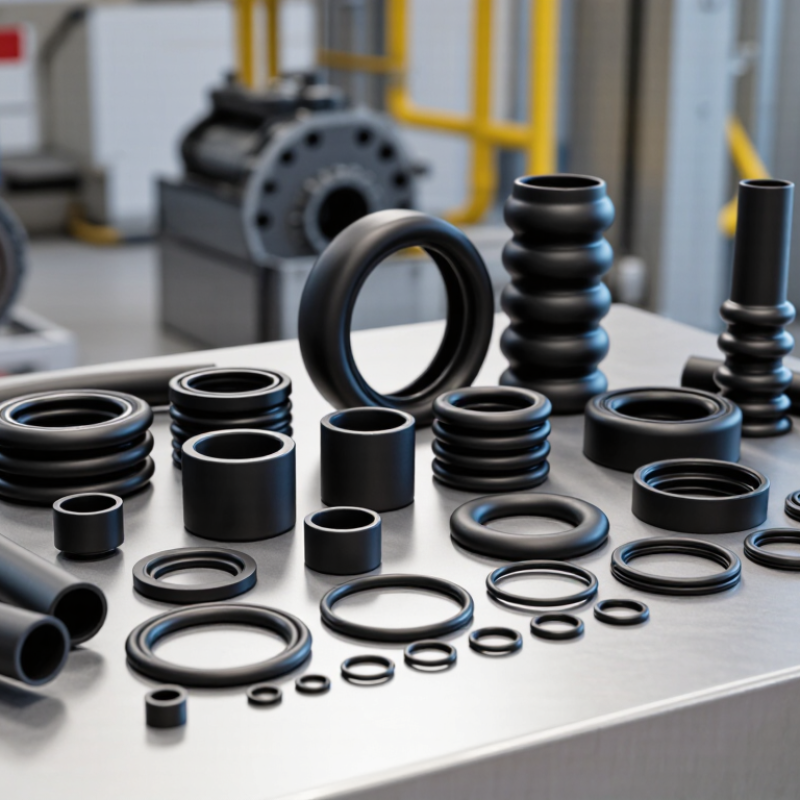
Global procurement teams choose Nbr when sealing performance must survive oil, fuel, vibration, and changing temperatures. Nitrile butadiene rubber offers strong resistance to petroleum-based fluids. It also provides reliable tensile strength and abrasion resistance. These properties support seals, O-rings, hoses, gaskets, and protective components across automotive, machinery, energy, and industrial applications.

The evidence is practical. The International Rubber Study Group’s 2024 World Rubber Industry Outlook identifies automotive and industrial manufacturing as important drivers of rubber demand. MarketsandMarkets also forecasts continued growth for the global NBR market through 2028, supported by fluid-handling and transportation applications. These reports suggest sustained demand, but they do not remove procurement risks. Quality varies between formulations, acrylonitrile levels, curing systems, and production batches. Small differences matter. A seal may swell in one hydraulic fluid yet remain stable in another.

Experienced buyers therefore assess more than unit price. They review compound specifications, temperature ratings, compression set, hardness tolerance, traceability, and test documentation. ISO 1629 helps classify rubber materials, while application-specific standards may guide testing and acceptance. Supplier audits, sample validation, and batch inspection add practical protection. A lower quotation can hide higher replacement costs. It may also reflect weaker process control.

Nbr is not a perfect material. It performs poorly with some aggressive chemicals, ozone exposure, and prolonged outdoor weathering. Procurement decisions should compare operating conditions with verified technical data. Reliable sourcing comes from evidence, not attractive promises. That discipline makes NBR a practical choice for global supply chains seeking consistency, service life, and controlled risk.
Why Choose NBR Rubber for Global Procurement?

What Is NBR Rubber and How Is It Made?

Why Choose NBR Rubber for Global Procurement?

What Is NBR Rubber and How Is It Made?

NBR rubber is a synthetic copolymer made from acrylonitrile and 1,3-butadiene. Manufacturers usually produce it through emulsion polymerization in water. Controlled temperature, initiators, and surfactants shape the polymer structure. The latex is then coagulated, washed, dried, and formed into compact bales.

Acrylonitrile content changes performance. Higher content improves resistance to oils, fuels, and many industrial fluids. Lower content supports better flexibility in colder environments. NBR is later mixed with carbon black, plasticizers, stabilizers, and curing agents. Heat and pressure complete the vulcanization process. The result can become a seal, hose, gasket, or molded component.

According to MarketsandMarkets’ 2024 NBR market assessment, demand is expected to grow at roughly 6% annually through the forecast period. Automotive and industrial sealing remain major application areas. That figure is useful, but not absolute. Forecasts can shift with energy prices, vehicle production, and regional regulations. In practical procurement, compound grade matters more than the word “NBR” alone. ISO 37 tensile testing and ISO 815 compression-set testing help compare suppliers. Small formulation differences can create large service-life changes.

Tips: Request the acrylonitrile range. Confirm hardness, temperature limits, and fluid compatibility. Ask for recent test reports. Do not rely on color alone. Check storage conditions, too. Heat and ozone quietly reduce performance.

Which Properties Make NBR Suitable for Industrial Applications?

Why Choose NBR Rubber for Global Procurement?

Which Properties Make NBR Suitable for Industrial Applications?

NBR rubber is widely selected for seals, gaskets, hoses, and oil-resistant components. Its strongest advantage is compatibility with petroleum oils, fuels, and many hydraulic fluids. This comes from its acrylonitrile content. Higher acrylonitrile levels usually improve oil resistance, tensile strength, and gas tightness. Lower levels generally provide better flexibility in colder conditions. The choice is not universal.

NBR also offers useful abrasion resistance and stable compression performance when properly formulated. In a factory, this can mean a gasket remains seated around a vibrating pump or a hose keeps its shape during repeated pressure cycles. Its low gas permeability supports pneumatic and hydraulic sealing. Temperature capability varies by compound, but many industrial grades operate reliably across moderate service ranges. Always check the compound data, not only the rubber name.

There are limits worth discussing. NBR performs poorly in strong ozone, sunlight, and some aggressive chemicals unless protective additives and suitable design are used. Excessive heat can also accelerate hardening and compression set. A practical procurement review should examine acrylonitrile level, hardness, tensile strength, elongation, fluid compatibility, and low-temperature behavior. Batch traceability matters too. Small formulation changes can alter field performance. Standards testing, sample validation, and dimensional inspection reduce that risk. NBR is dependable, but only when its properties match the actual service environment.

How Does NBR Perform Across Different Global Markets?

Why Choose NBR Rubber for Global Procurement?

How Does NBR Perform Across Different Global Markets?

NBR performs reliably where oils, fuels, and hydraulic fluids dominate. Its abrasion resistance also suits seals, hoses, and molded industrial parts. Mordor Intelligence’s 2024 market assessment estimates the global NBR market will grow steadily through 2030, supported by automotive and industrial demand. However, market growth does not guarantee identical performance everywhere.

Climate changes the purchasing decision. In Southeast Asia, high humidity and ozone exposure can shorten outdoor service life. In Northern Europe, low temperatures may reduce flexibility, especially in harder compounds. Across North America and the Middle East, petroleum contact and temperature cycling often receive greater attention. NBR usually handles mineral oils well, but it performs poorly against strong ozone, weathering, and some polar solvents. That limitation matters.

Test the actual compound.

A higher acrylonitrile content improves oil resistance but can reduce low-temperature flexibility. This trade-off is easy to overlook. ASTM D2000 and ISO 37 provide useful testing frameworks, while ISO 48 supports hardness evaluation. Still, laboratory results cannot fully reproduce storage, installation, or field conditions. Procurement teams should request batch-specific data, including tensile strength, elongation, hardness, compression set, and temperature limits. A seal that passes a factory test may still fail after months beside sunlight, dust, and heat. NBR is dependable, but only when its formulation matches the market environment.

Why Choose NBR Rubber for Global Procurement? - How Does NBR Perform Across Different Global Markets?

Global Market Typical Operating Conditions NBR Performance Common Applications Key Procurement Requirements Overall Suitability
North America Hydraulic systems, automotive equipment, industrial machinery, and oil-handling environments. Strong resistance to mineral oils, hydraulic fluids, fuels, and grease. Standard grades generally operate from approximately −30°C to +100°C; selected formulations may reach about +120°C. O-rings, seals, hoses, gaskets, diaphragms, and oil-resistant belts. ASTM D2000 or equivalent specifications, ASTM D471 fluid-resistance testing, dimensional control, and batch traceability. High
Europe Industrial processing, transportation, energy equipment, and applications subject to chemical and environmental controls. Reliable sealing performance with good resistance to petroleum-based fluids. NBR is not normally selected for prolonged exposure to ozone, sunlight, or weather unless protected or specially compounded. Hydraulic seals, fuel-system components, industrial gaskets, and pneumatic seals. EN or ISO dimensional requirements, REACH-related material documentation, restricted-substance declarations, and ISO 1817 fluid compatibility data. High for indoor and fluid-contact use
East Asia High-volume manufacturing, electronics-related equipment, automotive production, and general industrial automation. Offers a balanced combination of oil resistance, tensile strength, abrasion resistance, and cost efficiency. Formulation can be adjusted for hardness, low-temperature flexibility, or improved sealing force. Precision O-rings, molded seals, oil hoses, vibration-control parts, and pneumatic components. Consistent hardness, compression-set data, ISO 3601 or equivalent O-ring dimensions, visual inspection, and production-capacity assurance. High
Middle East High ambient temperatures, petroleum products, hydraulic equipment, and outdoor industrial installations. Performs well with mineral oils and fuels. Conventional NBR may age faster under continuous outdoor exposure to intense sunlight, ozone, and elevated temperature; protective design or a more weather-resistant elastomer may be required. Fuel seals, hydraulic seals, oil-resistant hoses, pump components, and industrial gaskets. High-temperature testing, compression-set results, UV and ozone exposure assessment, suitable packaging, and verification of the actual fluid and service temperature. High with formulation and weather controls
Latin America Mining, agriculture, transportation, hydraulic machinery, and general maintenance applications. Good resistance to petroleum-based oils and hydraulic fluids, with useful abrasion resistance and broad availability of standard compounds. Hydraulic hoses, equipment seals, agricultural machinery parts, gaskets, and oil-resistant tubing. Material certificates, hardness and tensile testing, abrasion and fluid-resistance data, export packaging, and consistent replacement-part dimensions. High
Africa Mining, heavy equipment, agricultural machinery, water-handling systems, and remote maintenance environments. Provides dependable oil and fuel resistance with good mechanical strength. Outdoor applications require attention to ozone, UV exposure, dust, temperature cycling, and storage conditions. Mining equipment seals, hydraulic components, fuel-system parts, pump seals, and maintenance spares. Robust packaging, shelf-life information, field-replaceable dimensions, batch identification, and validation under local temperature and fluid conditions. High for oil-contact applications
Technical note: NBR performance depends on acrylonitrile content, compound formulation, hardness, reinforcement, fluid chemistry, pressure, temperature, and exposure time. Typical NBR service limits are approximately −30°C to +100°C, while specialized compounds may extend the usable range. NBR is generally unsuitable for prolonged exposure to concentrated acids, strong oxidizing chemicals, aromatic solvents, ketones, and severe ozone or weathering conditions.

What Factors Should Buyers Evaluate When Sourcing NBR Rubber?

NBR rubber suits buyers needing oil resistance, stable sealing, and predictable industrial performance. The global NBR market was valued at about USD 2.4 billion in 2023, according to a 2024 industry market assessment. Demand is expected to grow near 6% annually through 2030.

Market growth alone should not decide your supplier.

Evaluate acrylonitrile content, hardness, tensile strength, elongation, and compression set. Acrylonitrile levels commonly range from 18% to 50%, affecting oil resistance and low-temperature flexibility. Higher content improves fuel resistance but can reduce flexibility in cold conditions.

ASTM D2000 provides useful test classifications, while ISO 1629 identifies NBR as nitrile butadiene rubber. Request batch-level test reports, not only a technical brochure. A low price can still be expensive.

In practice, vague tolerances often create leakage, rework, and delayed shipments. I have found that buyers sometimes specify temperature limits without testing the actual fluid. That assumption deserves review.

Tips: Compare samples under real pressure, oil, and temperature conditions. Check compression set after aging, not just initial hardness. Ask for traceability, inspection frequency, storage conditions, and production capacity. Confirm whether reported values follow the same ASTM or ISO test method. Smaller details matter. Also review packaging before ocean transport; heat, ozone, and long storage can change performance. No report replaces application testing, and that is the uncomfortable part.

How Can Companies Build a Reliable Global NBR Procurement Strategy?

A reliable global NBR strategy starts with application risk, not the lowest quoted price. Define acrylonitrile content, Mooney viscosity, cure system, hardness, and temperature exposure before sourcing. ISO 1629 identifies NBR as a nitrile rubber family, but grades still vary significantly in fuel resistance and low-temperature flexibility. That distinction matters. A seal for hydraulic fluid needs a different specification from a glove or hose. Use a controlled technical data sheet, with acceptable ranges and test methods.

Supplier qualification should combine documents with physical verification. Request recent certificates, batch traceability, change-notification rules, and independent test results. ASTM D1418 and relevant ISO methods can standardize identification and testing. The World Bank’s Logistics Performance Index 2023 assessed 139 countries and highlighted persistent gaps in tracking and timeliness. Therefore, qualify at least two production regions, not merely two trading companies. Keep safety stock near the converting plant, and model customs delays, port congestion, and temperature-sensitive storage. UNCTAD reports maritime shipping carries over 80% of world merchandise trade by volume. Route resilience matters.

Contracts should link price adjustments to published feedstock or energy indicators, with clear quality remedies. Quarterly supplier reviews should examine rejection rates, lead times, complaint closure, and forecast accuracy. Do not trust a perfect dashboard. It may hide weak sampling. A practical pilot includes three lots, different seasons, and production-scale mixing. One uncomfortable lesson remains: dual sourcing can increase testing costs before it reduces disruption risk. That cost is often easier to defend than an emergency grade substitution.

Why Choose NBR Rubber for Global Procurement?

Acrylonitrile content is a key purchasing parameter: higher content generally improves resistance to mineral oils and fuels, while lower content generally supports better low-temperature flexibility.

The ranges shown are commonly used industry classifications for NBR grades: low ACN (18–24%), medium ACN (25–30%), high ACN (31–35%), and very high ACN (36–50%). Companies can use this specification when comparing suppliers, validating equivalent grades, and planning multi-source procurement.

Subscribe to our Updates