

Why Are Real Insects in Resin So Popular?

Why Are Real Insects in Resin So Popular? The appeal begins with a tiny, visible detail: a delicate wing, a beetle’s glossy shell, or fine legs suspended in clear resin. Each piece feels like a miniature natural-history display. It also raises a practical question: how much of its appeal comes from genuine insect detail, and how much from careful craftsmanship?

Industry figures offer context, but not a precise answer. Grand View Research valued the global jewelry market at USD 353.26 billion in 2023 and forecast continued growth through 2030. That broad category includes many products; it does not measure Real Insects In Resin specifically. So the figure signals a large market for personal adornment, not proof of demand for insect pieces. That distinction matters.

The scientific interest is easier to describe. Dr. George Poinar Jr., a leading researcher on organisms preserved in amber, has studied how inclusions can retain anatomical detail and offer evidence about past life. His work concerns amber, which forms naturally over geological time; it should not be confused with modern resin. That difference is easy to miss. For buyers, a transparent finish, visible insect features, and clear material descriptions help separate an attractive object from a well-documented one. Still, appearance alone cannot establish an insect’s origin or handling history. The fascination is real, but the evidence deserves a closer look.
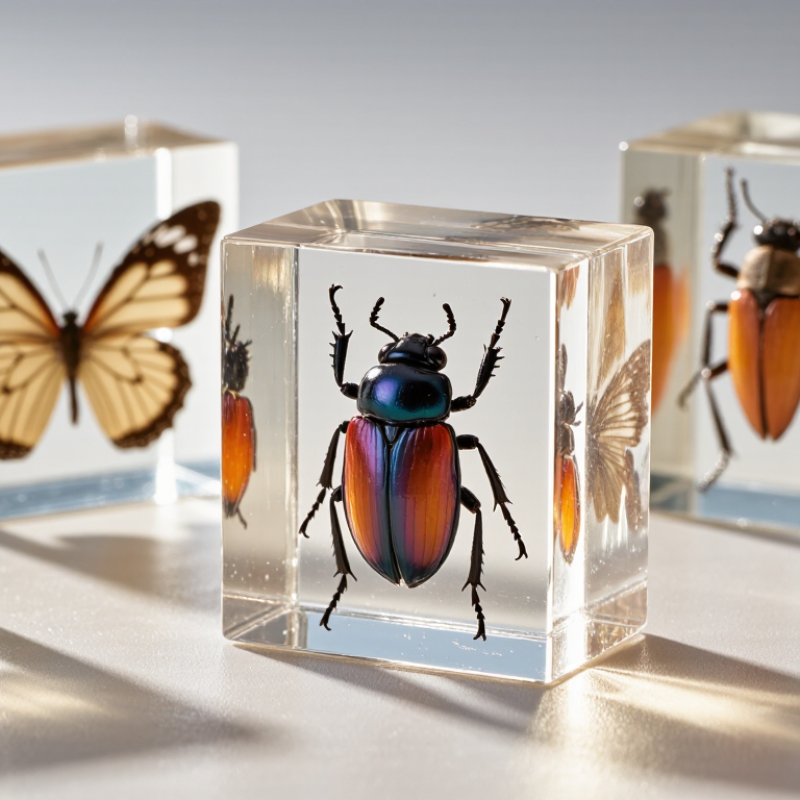
Why Are Real Insects in Resin So Popular?

What Real Insects in Resin Are

Real insects in resin are actual insect specimens embedded in clear, hardened polymer. They are not printed images or molded replicas. A maker typically positions a dried specimen in a mold, then pours resin around it in layers. Tiny legs, wing veins, and body hairs can remain visible, though bubbles or clouding sometimes obscure them. The result is a display object, not a scientific preservation method. Resin is also not fossil amber; amber forms naturally from ancient tree resin over long periods.

The Smithsonian National Museum of Natural History reports that its entomology collection contains about 35 million insect specimens. That scale shows why careful identification and documentation matter: appearance alone may not reveal an insect’s species or origin. In decorative resin pieces, labels may be limited, so buyers cannot always verify those details. Ask whether the specimen was farm-raised or collected, and whether its identity is documented. Small details matter. A curled antenna or trapped air bubble can be part of the object’s story, but it may also make identification harder. Resin can preserve a striking view; it cannot restore missing context.

How Insects Are Preserved in Resin

Real insects in resin are popular because they preserve delicate wings, legs, and colors in a clear, lasting display. The process takes patience. A specimen must be fully dry before casting, since trapped moisture can cause cloudiness or decay. The insect is positioned in a clean mold, often with tweezers, then covered with a thin layer of casting resin. Once that layer sets, more resin can be added to surround the specimen and reduce shifting. Tiny bubbles may cling to the wings or body. A careful crafter checks the piece under bright light before each pour.

Resin types and curing times vary, so follow the product instructions rather than guessing. Work in a well-ventilated area and wear suitable protective equipment. Keep dust away while the resin cures; even a small fiber can remain visible inside. Some insects darken or lose color over time, and resin may yellow with sunlight or age. That is part of the material’s limits, not always a mistake. Choose specimens obtained responsibly, and handle fragile parts gently. Perfect results are not guaranteed.

Tips: Use a level surface and clean, dry tools. Pour slowly. If bubbles remain, pause and inspect before adding another layer. Keep finished pieces out of direct sunlight.

Why Are Real Insects in Resin So Popular? — How Insects Are Preserved in Resin

The chart shows a common sequence for making a resin specimen. Insects are typically dried before casting; the exact resin, layering method, and curing time depend on the specimen and materials used.

What Makes Resin Specimens Visually Appealing

A resin specimen draws the eye through contrast: a dark wing, pale legs, and clear material around them. The transparent surface lets viewers inspect the insect from several angles without handling its fragile body. Under soft light, tiny hairs and wing veins can become visible. It feels like a miniature window.

Shape matters as much as detail. A curled antenna or uneven wing can suggest movement, even though the specimen is still. Resin depth separates foreground from background, making the insect appear suspended rather than simply displayed. Yet clarity is not automatic. Air bubbles, glare, or cloudy patches may interrupt the view and pull attention away from the specimen.

Color also shapes the impression. Amber tones can warm brown shells, while clear resin keeps pale markings easier to see. Simple, even lighting often reveals more than dramatic illumination. Still, visual appeal is subjective. Some people admire symmetry; others notice a chipped edge or folded leg and wonder about the insect’s final moments. That tension can be compelling, though it may feel uncomfortable, too.

Why Are Real Insects in Resin So Popular? — What Makes Resin Specimens Visually Appealing

Specimen or Feature What Can Be Seen Visual Appeal Viewing Consideration
Beetles Many beetles have hardened wing covers called elytra; some species also show glossy or metallic-looking surfaces. The solid body shape and reflective surfaces create strong highlights and clear contours inside transparent resin. Color and sheen vary by species and specimen; lighting angle can change how reflective surfaces appear.
Butterflies and moths Their wings carry tiny scales that form patterns and colors. Wing markings are usually best viewed from above. Broad wings make intricate patterns easy to see, while the resin allows the specimen to be viewed as a three-dimensional object. Wings are delicate, and handling or poor positioning before casting can damage or obscure their detail.
Dragonflies Dragonflies have two pairs of long, net-veined wings and large compound eyes. The spread wings create a balanced, radial composition, and their visible vein networks add fine detail. Thin wings can be difficult to position; reflections on the resin surface may affect visibility.
Cicadas Cicadas have prominent eyes, sturdy bodies, and clear or partly translucent wings with visible veins. The combination of a substantial body and delicate wings provides contrast in texture and form. Details are easiest to inspect when the specimen is oriented so the wings and body are not hidden by one another.
Ants An ant’s body is divided into a head, thorax, and abdomen, with a narrow waist between the main body sections. The small scale and distinct body segmentation invite close inspection through a clear block. Because ants are small, clarity, magnification, and the specimen’s position strongly affect how much detail is visible.
Transparent resin Clear resin surrounds the specimen and can be viewed from multiple sides, depending on the shape of the casting. It gives the insect a suspended appearance and reveals depth that a flat display cannot provide. Surface scratches, bubbles, haze, or reflections can reduce clarity; resin does not guarantee permanent preservation of every color.
Three-dimensional positioning The insect’s posture, wing spread, and orientation remain visible as part of the cast. Different viewing angles reveal overlapping forms, body structure, and details that may be missed in a two-dimensional image. Positioning is fixed after the resin cures, so the chosen angle determines which features are most prominent.
Color and contrast Natural body colors and patterns appear against the clear casting, although appearance depends on the specimen and lighting. Contrast between the insect and its surroundings helps its shape and markings stand out. Prolonged exposure to strong sunlight can contribute to fading or yellowing in some materials; indirect light is generally preferable for display.

Note: Appearance varies with insect species, specimen condition, casting quality, lighting, and viewing angle. Resin can protect a specimen from direct handling, but it should not be assumed to prevent all long-term changes.

Why Collectors and Educators Value Them

Collectors value real insects in resin because each specimen preserves details that are easy to miss outdoors. A beetle’s ridged wing covers, a moth’s fine antennae, or the joints of a grasshopper’s legs can be examined at close range. The clear block also protects the specimen from handling and dust. Small details become easier to compare.

For educators, resin-encased insects can support lessons in anatomy, classification, and biodiversity. Students can rotate a specimen under classroom light and observe its shape from several angles. A teacher might ask them to compare leg structures or identify visible body segments. It is a useful object to discuss. Still, it cannot show how an insect moves, feeds, or behaves in its habitat.

Good specimens should come with reliable identification and clear information about how they were obtained. Resin may alter colors or magnify features, so labels and careful observation matter. Not every detail is obvious. I’ve found that a striking specimen can invite questions, but it can also make insects seem like objects rather than living parts of an ecosystem. That tension is worth discussing with collectors and students.

Ethical and Practical Considerations of Resin Insect Displays

Why Are Real Insects in Resin So Popular?

Ethical and Practical Considerations of Resin Insect Displays

Real insects in resin preserve details that photographs can miss: the fine veins in a wing, the texture of a beetle’s shell, or delicate antennae. Their clear, compact presentation can make natural history feel tangible. But a beautiful display does not reveal how the specimen was obtained. Prefer sellers who explain their sourcing, and avoid pieces with vague or unverifiable origins. Naturally deceased specimens may be an option, but the claim deserves a clear explanation. Ethical sourcing is not always obvious.

Resin also has practical limits. Heat and strong sunlight can discolor some pieces over time, while trapped bubbles may hide small features. Dust the surface with a soft, dry cloth; avoid harsh cleaners that could cloud it. Keep displays away from sunny windows and hot radiators. For anyone making a display, follow the resin’s safety instructions, use suitable ventilation and protective gloves, and let each layer cure as directed. Small details matter.

Tips: Inspect the insect from several angles before buying. Check for cloudy patches, loose wings, or sharp edges. Ask how it was sourced and preserved. If the answer feels unclear, pause. I still think these objects can invite curiosity, but admiration should leave room for questions about where the specimen came from—and whether the display protects its details well.

Subscribe to our Updates